
The magical moment when your baby first shows curiosity about the world around them marks a significant milestone in their development. As parents, we want to nurture this natural exploration while ensuring our little ones remain safe and supported. Front-facing baby carriers offer an exciting solution, allowing babies to discover their environment while maintaining close contact with their caregivers. However, not all carriers are created equal when it comes to supporting proper development. Ergonomic front-facing carriers are specifically designed to maintain optimal hip and spine alignment while providing comfort for both baby and caregiver. This comprehensive guide will help you navigate the essential features of ergonomic carriers, ensuring you make an informed choice that promotes healthy development, maintains proper posture, and enhances the bonding experience with your little explorer. Whether you’re a first-time parent or upgrading your current carrier, understanding the balance between exploration and ergonomic support is crucial for your baby’s well-being.
Why Ergonomics Matters in Front Facing Carriers
A baby’s developing body requires special attention during the crucial early months of growth. The spine and hip joints are particularly vulnerable as they transition from the natural C-curve of newborn posture to the mature S-curve of adulthood. When using front-facing carriers, proper ergonomic support becomes essential to protect these developing structures. Non-ergonomic carriers can force babies into an unnatural straight-backed position, potentially straining their developing spine and creating pressure points on their growing hip joints. This positioning can interfere with natural development and, in some cases, contribute to hip dysplasia or other musculoskeletal issues.
In contrast, ergonomic carriers are designed to maintain the natural curve of your baby’s spine while supporting their hips in the recommended “M” position. This design philosophy respects your baby’s developmental stages, allowing for healthy bone and muscle growth. The benefits extend beyond physical development – proper positioning promotes better blood circulation, reduces strain on developing joints, and supports natural muscle development. When comparing outcomes, babies carried in ergonomic carriers consistently show better posture development and reduced risk of hip problems compared to those carried in traditional, non-ergonomic designs.
Essential Ergonomic Features Explained
Optimal Hip and Spine Positioning
The cornerstone of ergonomic carrier design lies in maintaining the crucial M-shape seated posture, where your baby’s hips are spread naturally, and knees are positioned slightly higher than their bottom. This position supports healthy hip joint development and prevents stress on growing joints. The adjustable seat width is vital, allowing the carrier to grow with your baby while maintaining optimal support from knee to knee. This ensures even weight distribution across your baby’s thighs and prevents dangerous dangling that could strain hip joints.
Head/Neck Support Systems
Proper head and neck support is essential as babies develop their muscle control. Quality ergonomic carriers feature adjustable headrests that can be positioned to provide firm support for newborns while allowing more movement freedom as babies gain strength. The support system should be easily adjustable with one hand, transitioning smoothly between full support for sleeping babies and partial support for alert, exploring infants.
Comfort Elements for Parents
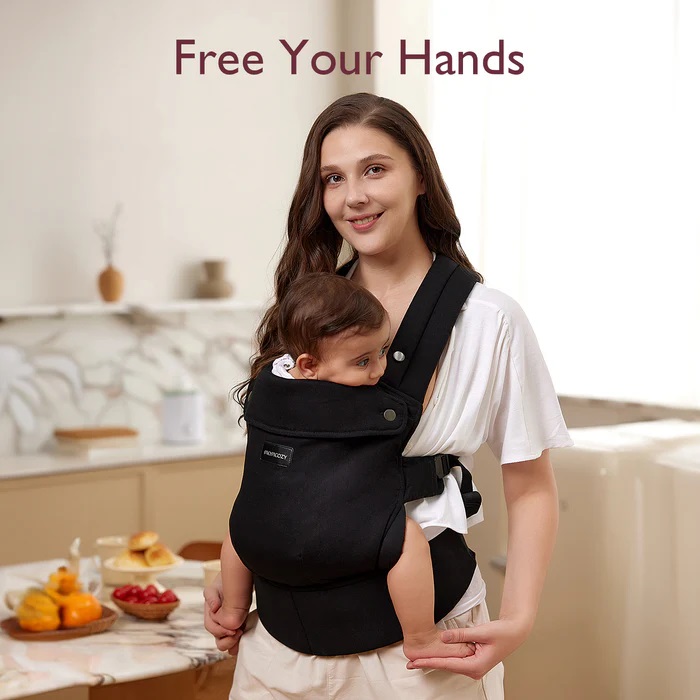
Parent comfort is equally important for safe babywearing. Advanced ergonomic carriers like the momcozy line incorporate wide, padded lumbar support belts that distribute weight evenly across the hips and lower back, preventing strain during extended wear. The engineering focuses on vertical weight distribution, keeping your baby’s weight close to your center of gravity. Strategic padding placement and crossable shoulder straps allow for customized fit adjustments. Modern breathable fabrics with moisture-wicking properties help regulate temperature for both parent and baby, making extended wearing sessions comfortable in various weather conditions.
Lightweight Carrier Advantages
Modern carrier design has revolutionized babywearing through innovative material technology. Advanced mesh fabrics offer superior breathability while maintaining structural integrity, typically weighing 30% less than traditional cotton carriers. Frameless designs, utilizing high-strength nylon blends, provide robust support without the added bulk of internal structures, making them ideal for active parents. These lightweight solutions excel in portability, easily folding into diaper bags or travel luggage without compromising ergonomic support.
The reduced weight significantly impacts daily usability, allowing parents to carry their little ones for longer periods without fatigue. Strategically placed mesh panels create ventilation zones that regulate temperature, preventing overheating during warm weather or extended wearing sessions. This thermal management benefits both baby and caregiver, particularly during summer months or in humid climates. The lightweight construction also enhances mobility, enabling parents to navigate crowded spaces or tackle everyday tasks while maintaining proper ergonomic support for their baby’s developing body.
Safety First: Front Facing Guidelines
Before transitioning to front-facing positions, ensure your baby meets crucial developmental milestones. Most pediatricians recommend waiting until your baby has strong, consistent head and neck control, typically around 4-6 months of age, and weighs at least 14 pounds. Watch for signs that your baby is ready by observing their ability to hold their head upright consistently and show active interest in their surroundings. During wearing sessions, regularly monitor your baby’s temperature, color, and breathing patterns.
Keep front-facing sessions brief, ideally 15-30 minutes, as babies can become overstimulated in this position. Watch for signs of fatigue like fussiness, turning away from stimuli, or attempting to bury their face in your chest – these indicate it’s time to switch to an inward-facing position. Check your baby’s legs periodically to ensure proper blood circulation; their knees should be free to bend and move. Avoid front-facing positions during nap times or when your baby shows signs of tiredness, as their head may slump forward without proper support.
Step-by-Step: Using Carriers Correctly
Positioning Your Baby
Begin by loosening all straps and holding your baby securely against your chest. Ensure their legs are spread wide enough to create the essential M-position, with knees slightly higher than their bottom. Check that both legs extend fully through the carrier openings, with fabric reaching from knee to knee. Verify that your baby’s bottom is seated deeply in the carrier’s bucket seat. The carrier panel should extend up to your baby’s neck, supporting their entire torso without restricting arm movement.
Adjusting for Parent Comfort
Start with the waist belt positioned just above your hip bones, ensuring it’s snug but not overly tight. Test the belt tension by sliding two fingers underneath – this indicates proper support without constriction. Position shoulder straps to form an H-pattern across your back, avoiding any twisting. Adjust the chest clip to sit between your shoulder blades, creating even tension across both shoulders. Fine-tune the carrier’s height so your baby’s head rests within kissing distance.
Transitioning Between Positions
When switching from forward-facing to rear-facing, maintain one hand on your baby while loosening the shoulder straps slightly. Support your baby’s torso as you gently rotate them toward your chest, keeping their legs in the M-position throughout the movement. Once facing inward, readjust the seat width and panel height to ensure proper support. For added security during transitions, practice these movements while seated or kneeling on a soft surface until you develop confidence in the process. Always verify all buckles and adjustments after position changes, listening for clicking sounds that confirm secure connections.
Top Lightweight Ergonomic Picks
Leading ergonomic carriers combine advanced structural support with innovative lightweight materials. The most effective designs feature adjustable panels that grow with your baby while maintaining the crucial M-position support. Premium carriers incorporate multi-layer mesh panels strategically placed for ventilation, typically achieving optimal weight distribution with materials weighing less than 2 pounds. These carriers excel in providing firm lumbar support through anatomically curved waistbands and reinforced shoulder straps that don’t compromise on structural integrity.
Three standout designs have revolutionized the ergonomic carrier market through their innovative approaches. The first utilizes aerospace-grade aluminum buckles with moisture-wicking mesh, perfect for active families in warm climates. The second features a convertible design with detachable panels, ideal for traveling parents seeking versatility without added bulk. The third incorporates cross-back strap engineering with breathable bamboo fabric, making it exceptionally comfortable for extended wearing sessions. These carriers particularly shine during summer outdoor activities, urban exploration, and travel scenarios where both ergonomic support and lightweight construction are essential. For families balancing multiple activities, carriers with quick-adjustment features and compact folding capabilities offer the most practical solutions while maintaining proper postural support.
Making the Right Choice for Your Baby’s Development
Selecting the right ergonomic front-facing carrier is a crucial investment in your baby’s developmental journey. Remember that proper positioning is non-negotiable – the M-shape seat position, adequate head support, and even weight distribution form the foundation of safe babywearing. When evaluating carriers, prioritize adjustable features that grow with your baby while maintaining ergonomic support. Essential features to verify include wide, padded shoulder straps, sturdy lumbar support, breathable materials, and secure but easily adjustable buckles. Most importantly, always check that your carrier provides knee-to-knee support and maintains your baby’s natural spine curvature. Before each use, verify all safety features: proper leg positioning, secure buckles, aligned straps, and appropriate panel height. By choosing a carrier that balances ergonomic support with lightweight comfort, you’re not just investing in a practical parenting tool – you’re supporting your baby’s healthy physical development while creating countless opportunities for safe, comfortable exploration together.
